
Laser Hair Removal
Hair removal can be genuinely life-changing. Whether it’s simply the time spent shaving, waxing and planning those never-ending “everything showers”, or unwanted hair that has affected your confidence for years, achieving long-term hair reduction can give you back both time and confidence.
We all seem to be looking for ways to make life that little bit easier, and this is one treatment that really does. IPL offers a long-term solution to unwanted hair, helping to reduce both the amount and density of hair growth over time, with far less need for the constant maintenance that comes with traditional hair removal.
We’ve been working with laser and IPL hair removal for over 15 years, so you can feel confident that you’re in experienced and knowledgeable hands throughout your treatment journey. And there’s one thing our clients say to us time and time again: “I just wish I’d done it sooner.”
The Science
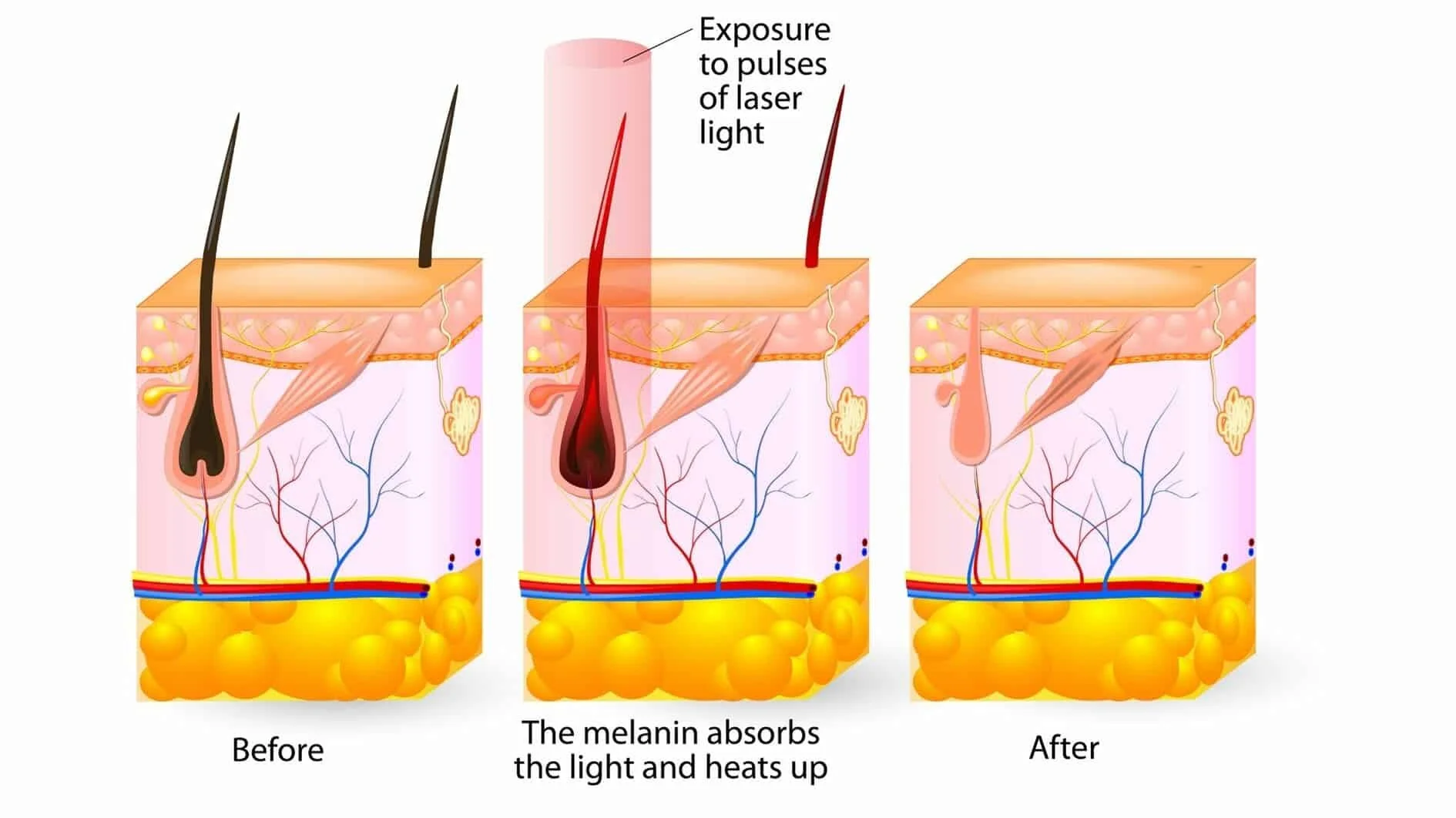
We use the Ellipse SPT+ IPL system, which uses broad-spectrum light to selectively target the pigment (melanin) within the hair. This light energy is converted into heat and travels down into the hair follicle, where it creates a controlled thermal effect that damages the structures responsible for producing the hair.
One of the reasons we chose Ellipse is its unique dual-filtering technology, designed to remove unnecessary wavelengths of light before they reach the skin. This allows us to deliver the energy needed to target the hair while prioritising the safety of the surrounding skin.
With each treatment, we target hairs during the active growth phase, gradually reducing and altering the density of regrowth. Hair typically becomes finer, lighter and more sparse over a course, with some areas achieving a very significant long-term reduction.
Benefits of Venus Body:
✔ Long-term hair reduction
✔ Freedom from regular shaving & waxing
✔ Helps reduce ingrown hairs
✔ Smoother-feeling skin
✔ Helps reduce shaving-related irritation
✔ Can improve confidence around unwanted hair
✔ Suitable for multiple areas of the body
Your Treatment Plan
Because our light-based technology can only effectively target hairs at the correct stage of their growth cycle, a course of treatments is essential. We recommend a minimum initial course of 6 treatments, although the number required may vary depending on the area, your hair growth, hair colour and individual response.
Before we begin, you’ll have a consultation and patch test at least 48 hours before your first treatment. This gives us the opportunity to assess your skin and hair, check your suitability and select the appropriate settings for you.
From there, we’ll create your personal treatment plan, including how frequently we need to see you and what you can expect throughout your course. Our aim isn’t simply to remove hair temporarily, but to achieve a significant, long-term reduction that makes everyday life that little bit easier.
Laser Hair Removal
Consultation and Patch Test – £30.00 (redeemable against treatment / courses)
Face
Upper Lip – £25.00
Chin – £25.00
Sides of Face – £45.00
Bikini
Standard Bikini (from the knicker line outwards) – £45.00 Extended Bikini (extended inwards from the knicker line) – £50.00 Brazilian (all hair treated underneath) – £70.00 Hollywood (all hair removed) – £75.00 Buttocks – £85.00
Arms
Underarm – £35.00
Half Arm – £70.00
Full Arm – £95.00
Fingers – £15.00
Legs
Half Leg – £85.00
Full Leg – £180.00
Thighs – £105.00
Toes – £15.00
Body
Half Back – £90.00
Chest – £90.00
Stomach – £50.00
Stomach Centre Line – £35.00
Areola – £35.00
Men
Full Back – £150.00
Half Back – £100.00
Chest Full – £100.00
Chest Centre – £40.00
Torso – £100.00
Half Arm – £90.00
Full Arms – £125.00
Full Leg – £200.00
Half Leg – £130.00
When you pre pay for a course of 6 treatments, you will receive one treatment FREE
*Klarna & Clear Pay split payment options available for course payments*
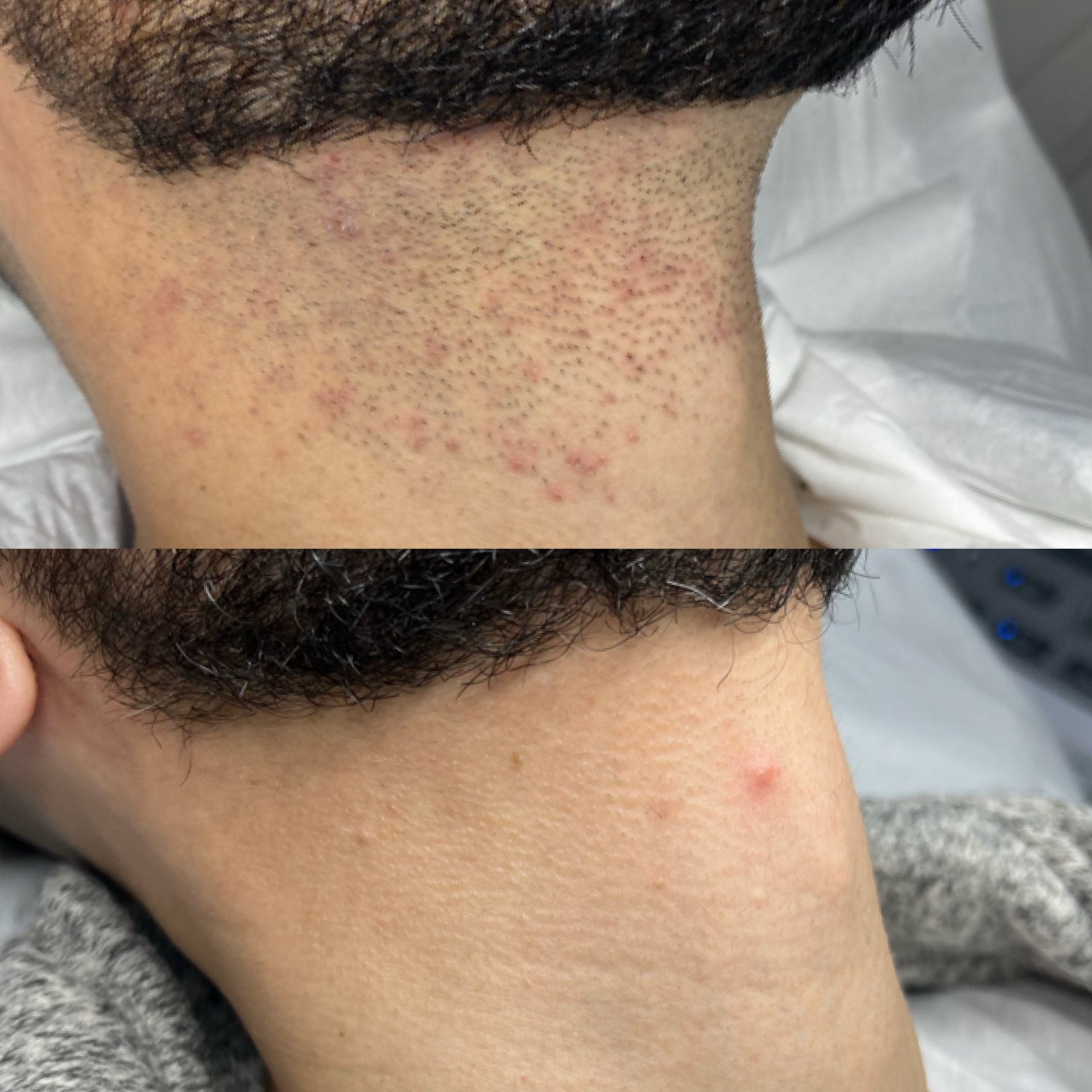
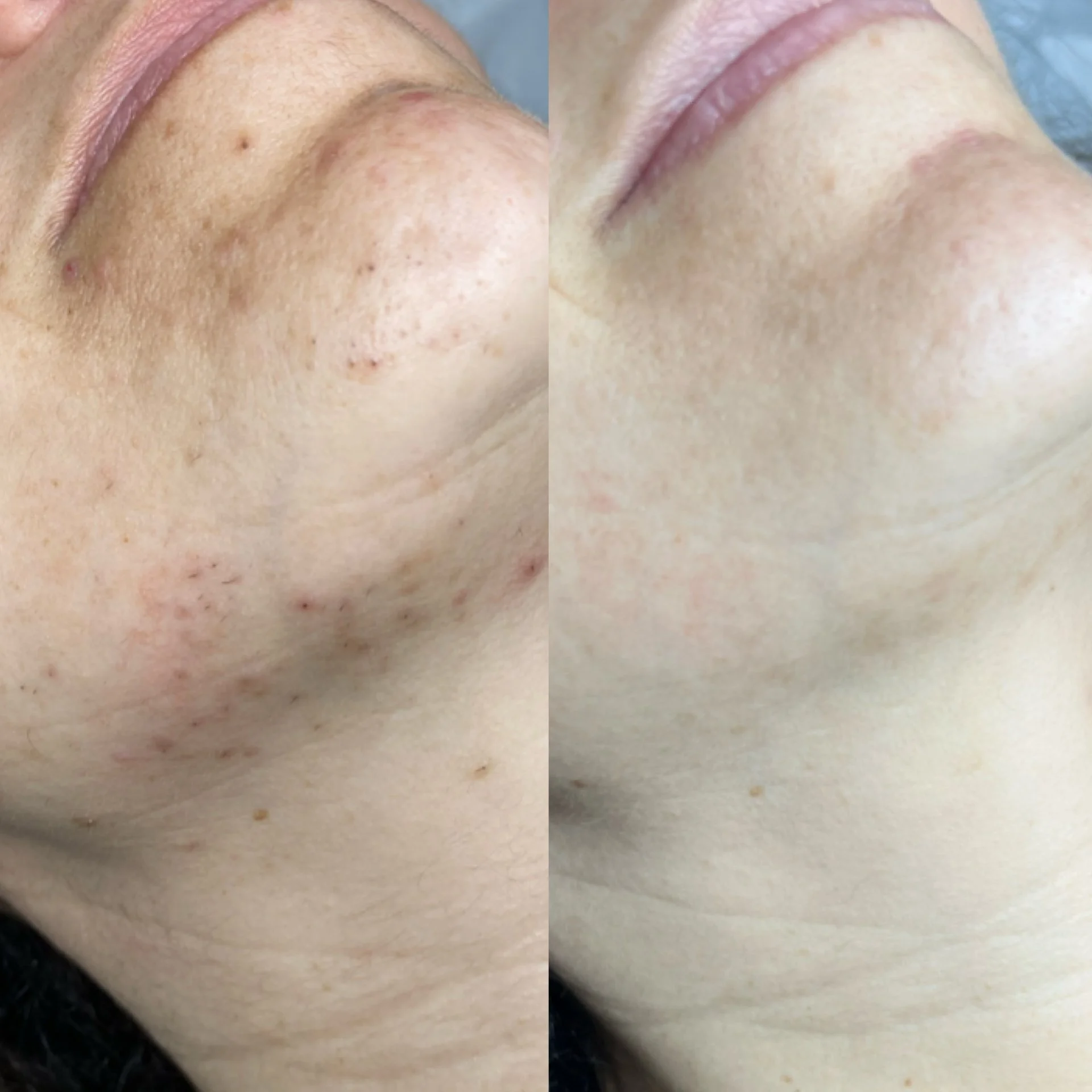
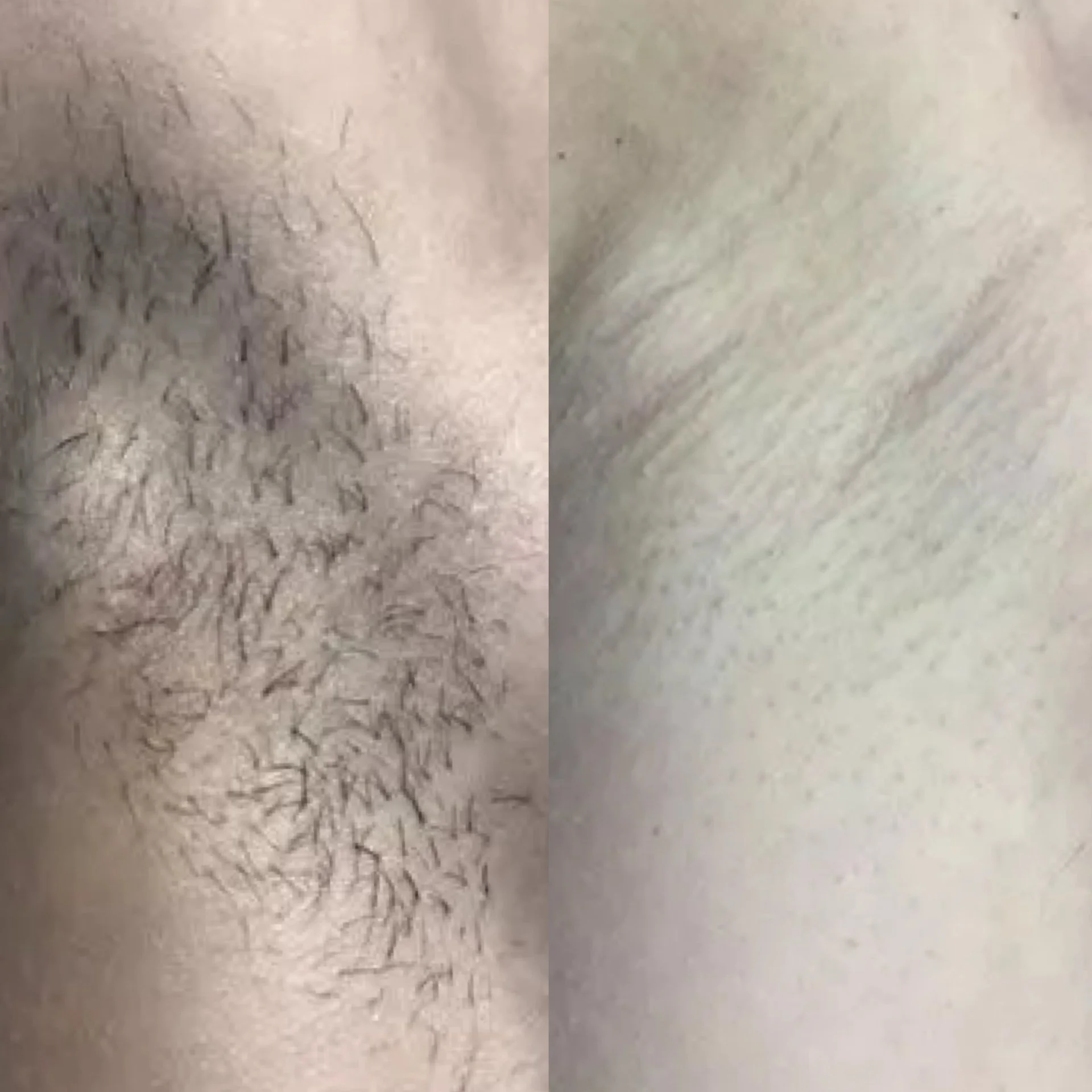
Real Results
FAQs
-
Our Ellipse IPL system can safely treat a wide range of skin tones, up to Fitzpatrick Skin Type V, providing the hair contains enough pigment for the light to effectively target it.
We do not treat Fitzpatrick Skin Type VI (deeply pigmented/Black skin) with our IPL system. Because IPL targets melanin, very deeply pigmented skin contains more melanin for the light to interact with, increasing the risk of burns and pigmentation changes.
For Fitzpatrick VI skin, a long-pulsed Nd 1064nm laser is generally a more appropriate technology for hair reduction because its wavelength is less strongly absorbed by epidermal melanin. We will always assess your skin and hair during your consultation and, if our technology isn’t the safest option for you, we will tell you.
-
IPL provides permanent hair reduction rather than permanent hair removal. As long as you’re a living, breathing human, we can’t stop your body from ever producing another hair, and there is currently no laser or IPL device that can guarantee 100% permanent removal.
We generally aim up to 80% permanent hair reduction, although in our experience many of our clients achieve more than this. Any remaining or future growth is usually significantly finer, lighter and much more sparse than before.
-
Yes, occasional maintenance is completely normal. On body areas, once you’ve completed your initial course, most clients find they only need a top-up once or twice a year.
At this stage, you certainly won’t be treating the dense growth you started with. Regrowth is usually very patchy, with individual hairs appearing here and there, so maintenance is often simply about singling out those few remaining hairs.
-
Is facial hair different from body hair?
Yes. Facial hair, particularly around the chin, upper lip and jawline, is much more hormonally influenced than most body hair. Because of this, facial areas can require more treatments during the initial course and more regular maintenance afterwards.
We’ll explain this during your consultation so you have realistic expectations for the area we are treating.
-
Yes. Hormonal conditions such as PCOS can stimulate new hair growth, which may mean you require additional treatments or more frequent maintenance to manage the hair long term.
IPL can still achieve a significant reduction in existing suitable hair, but it cannot prevent an underlying hormonal condition from stimulating new hair growth in the future.
-
Yes. Certain medications can influence hair growth and may mean that you require additional maintenance treatments. Some medications can also make the skin more sensitive to light, so it is extremely important that you tell us about any prescription medication, topical medication or supplements you are taking and let us know if anything changes during your course.
-
Please let us know about any medication you are taking before your treatment, including over-the-counter medication. Where medically appropriate, we recommend avoiding anti-inflammatory painkillers such as ibuprofen immediately before treatment.
However, you should never stop or alter medication that has been prescribed or medically recommended in order to have IPL. If you’re unsure, please speak to us before your appointment.
-
Hormonal changes during pregnancy can sometimes stimulate new or increased hair growth, although this doesn’t happen to everyone.
If you do notice some regrowth, it does not mean that all of your previous results have been lost or that your hair will completely return to how it was before treatment. Once it is appropriate to resume treatment, we can assess any new growth and advise whether some additional sessions are needed.
-
No. We do not perform IPL Hair Removal during pregnancy. Treatment can be resumed at an appropriate time after pregnancy, and we can reassess your hair growth and create a plan from there.
-
Sun exposure is extremely important when having IPL. You must have no sun exposure to the treatment area for at least 3 weeks before and 3 weeks after treatment.
If you have a deeper tan, particularly on darker skin tones or if you tan deeply, you may need to wait longer than 3 weeks before treatment. Your skin needs to have returned to its normal baseline colour before we can safely treat it.
If you are unsure, please contact us before your appointment rather than taking the risk.
-
IPL works by targeting melanin (pigment) within the hair. A tan increases the amount of melanin within the surrounding skin, meaning the light can also be absorbed by the skin rather than being selectively directed towards the hair.
This increases the risk of adverse reactions, including burns and changes in pigmentation, which is why we are very strict about sun exposure throughout your course.
-
The treatment area must be completely free from fake tan before your appointment. This includes gradual tanning products. Please allow the tan to fully fade and make sure there is no remaining colour or residue on the skin before treatment.
-
No. You should not wax, pluck, thread or epilate the hairs during your IPL course because these methods remove the hair from the follicle, leaving nothing for the IPL energy to target.
You can shave between treatments, as shaving leaves the hair within the follicle for us to target.
-
Yes. We will advise you when to shave the treatment area before your appointment. The hair needs to remain within the follicle for IPL to target it effectively, but we don't want long hair sitting above the surface of the skin.
-
We recommend a minimum initial course of 6 treatments, but everyone is different. The number you need will depend on the area being treated, your hair colour and density, your natural growth cycle and whether hormonal factors are influencing your hair.
Facial areas may require more initial sessions than body areas because of their hormonal influence.
-
Hair grows in different cycles, and IPL is most effective when the hair is in its active growth phase (anagen). Not every hair will be in this phase on the day of your appointment.
Repeating your treatments at carefully timed intervals allows us to catch different hairs as they enter the appropriate growth phase, gradually reducing the overall amount and density of hair.
-
IPL relies on pigment within the hair to absorb the light, so it works best when there is sufficient melanin within the hair. Very blonde, white, grey and some red hairs may not contain enough suitable pigment to respond effectively.
We will assess your hair during your consultation and let you know whether we believe IPL is the right treatment for you.
-
Yes. Everyone requires a consultation and patch test at least 48 hours before their first treatment.
This allows us to assess your skin and hair, discuss your medical history and medications, explain what you can realistically expect and select appropriate settings for your skin.
-
IPL is generally very well tolerated. Most clients describe the sensation as a light elastic band flick against the skin, with a brief feeling of warmth as each pulse is delivered.
Some areas can feel a little more sensitive than others, particularly where the hair is thicker or denser, but the sensation is very quick and usually becomes progressively easier as the hair reduces throughout your course.
-
There is usually very little downtime. You may experience some temporary redness, warmth or slight swelling around the follicles immediately after treatment, which usually settles fairly quickly.
-
For the first 24 hours after your treatment, avoid anything that creates additional heat within the skin, including hot baths and showers, saunas, steam rooms and intense exercise.
IPL works by delivering light energy that is converted into heat within the hair follicle, so the skin can remain warm and more reactive immediately afterwards. Adding further heat too soon can increase irritation and may trigger a temporary heat rash or increased redness.
Keep the area cool, avoid rubbing or irritating the skin and follow the aftercare advice given by your therapist. You’ll also need to avoid sun exposure to the treated area for at least 3 weeks after treatment.
-
Timing your treatments correctly is really important because we want to target the hairs as they enter their active growth phase.
For facial areas, we usually treat every 4 weeks, as facial hair has a faster growth cycle. For body areas, treatments are usually spaced every 6 weeks.