Rosacea
Helping you understandand, manage and navigate Rosacea with confidence…
What is rosacea?
Rosacea is a chronic inflammatory skin condition that can present very differently from one person to another. While there is no single known cause, we do know that the skin’s inflammatory response and protective barrier function play an important role.
Understanding what is happening within your skin allows us to look beyond simply treating what we can see and take a more considered, individual approach.
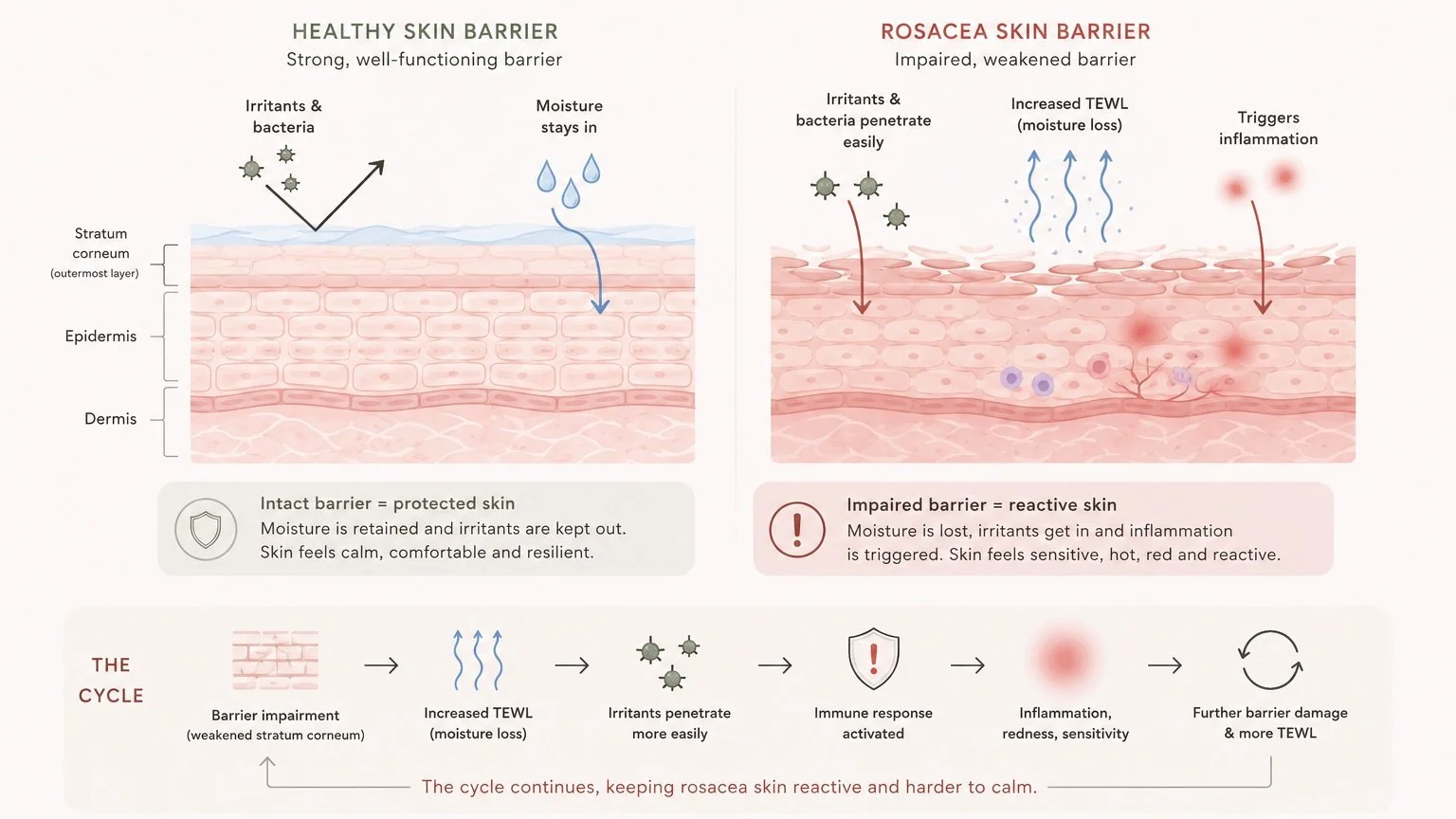
What is Happening Within Rosacea Skin?
Rosacea skin has a heightened inflammatory response, meaning it can react more readily to things that wouldn’t normally cause a problem.
At the same time, the epidermal barrier, particularly the stratum corneum, can be impaired. When this protective barrier isn’t functioning effectively, the skin loses water more easily and becomes increasingly dry, sensitive and reactive.
This combination of inflammation and compromised barrier function is why calming the skin and supporting its natural protective functions are so important when managing Rosacea.
Rosacea Subtypes
-
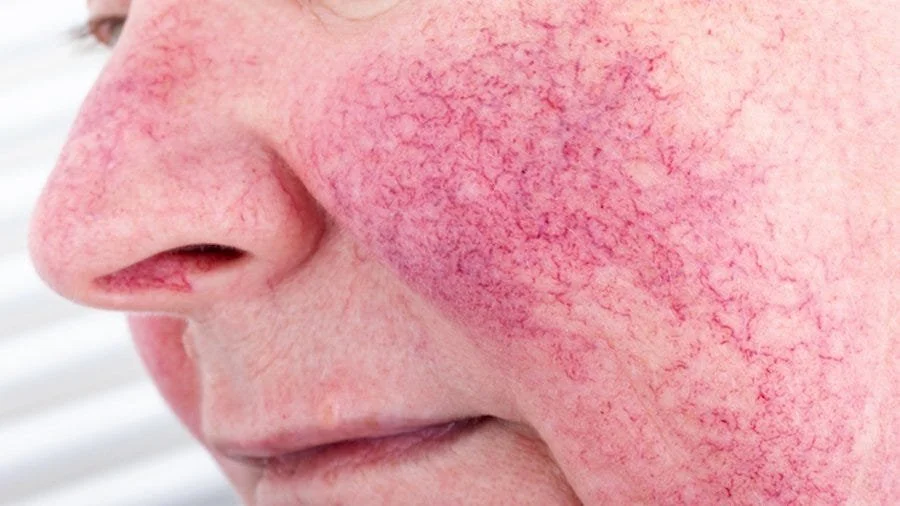
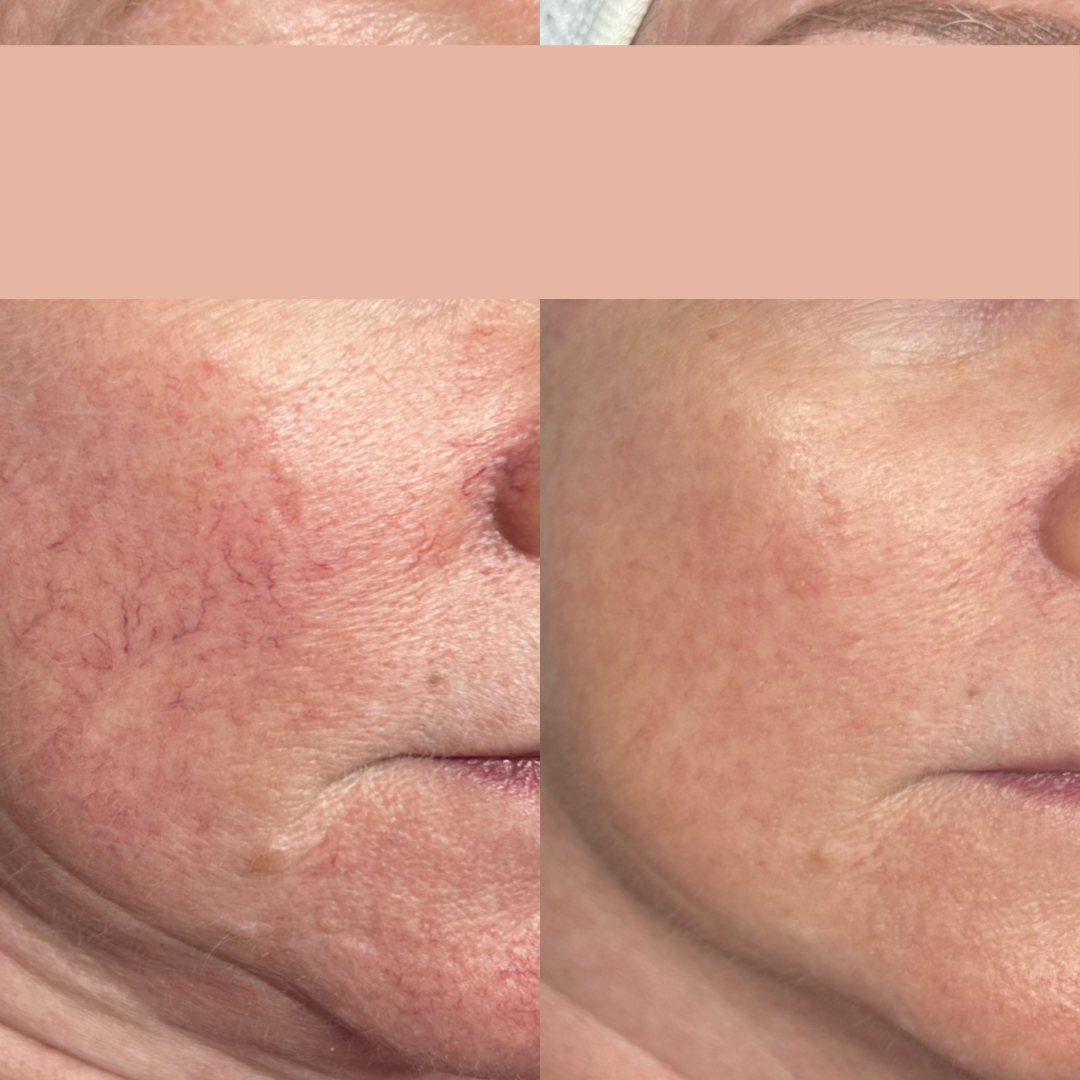
Subtype 1 - Erythematotelangiectatic Rosacea
Presents as a diffused facial redness, capillary veins may be present, can also experience dryness and heat in the area to touch.
-
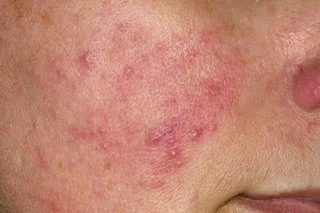
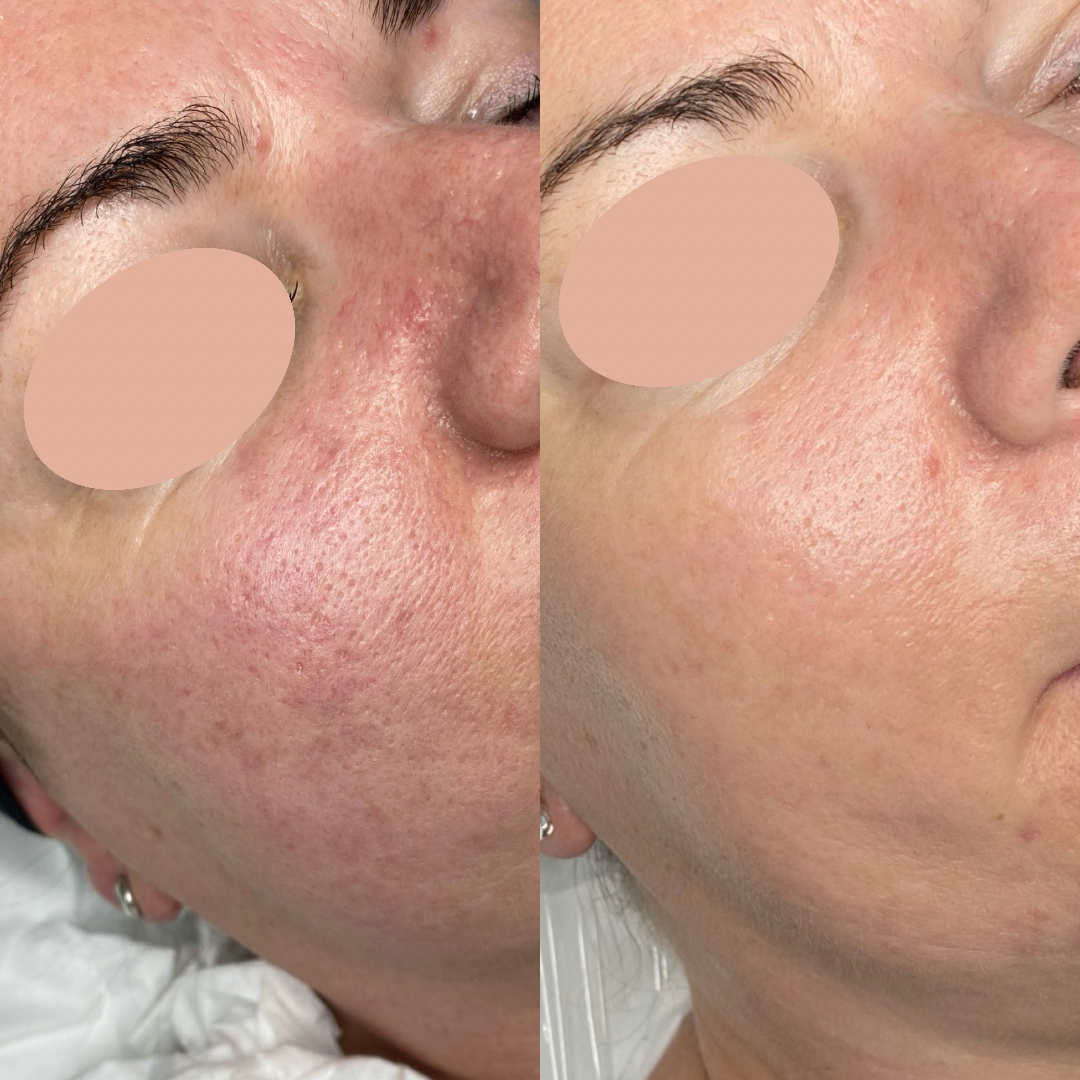
Subtype 2 - Papulopustular Rosacea
Presents as papules and pustules on the skin, often confused as acne however are very different conditions. Can feel hot and stingy, can also experience dryness and flakiness.
-
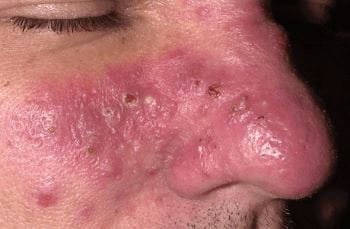
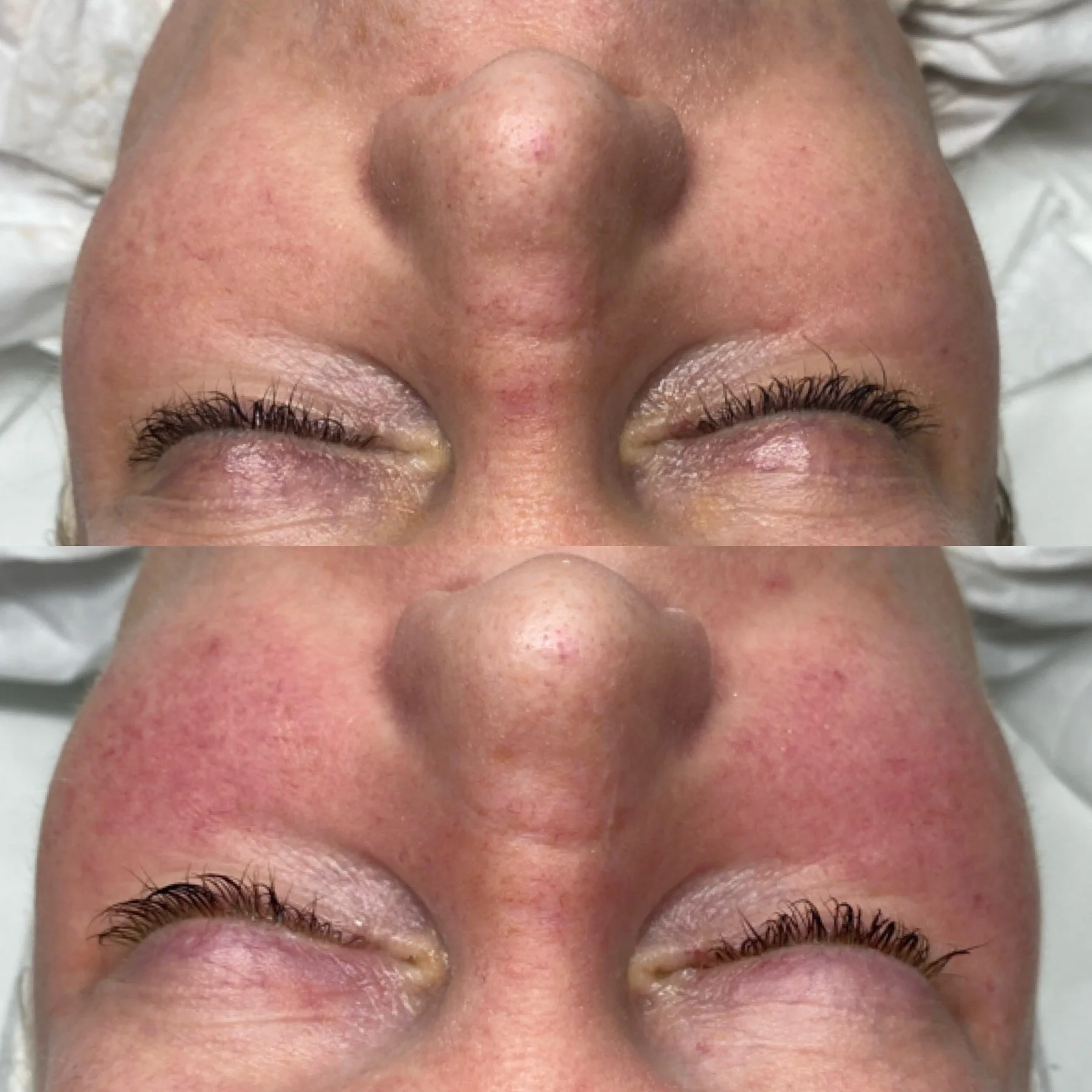
Subtype 3 - Rhinophyma Rosacea
Advanced connective tissue disorder that commonly effects the nose area. Presents itself as enlarged, uneven and thickened skin tissue. Requires medical intervention. Not caused by alchohol.
-
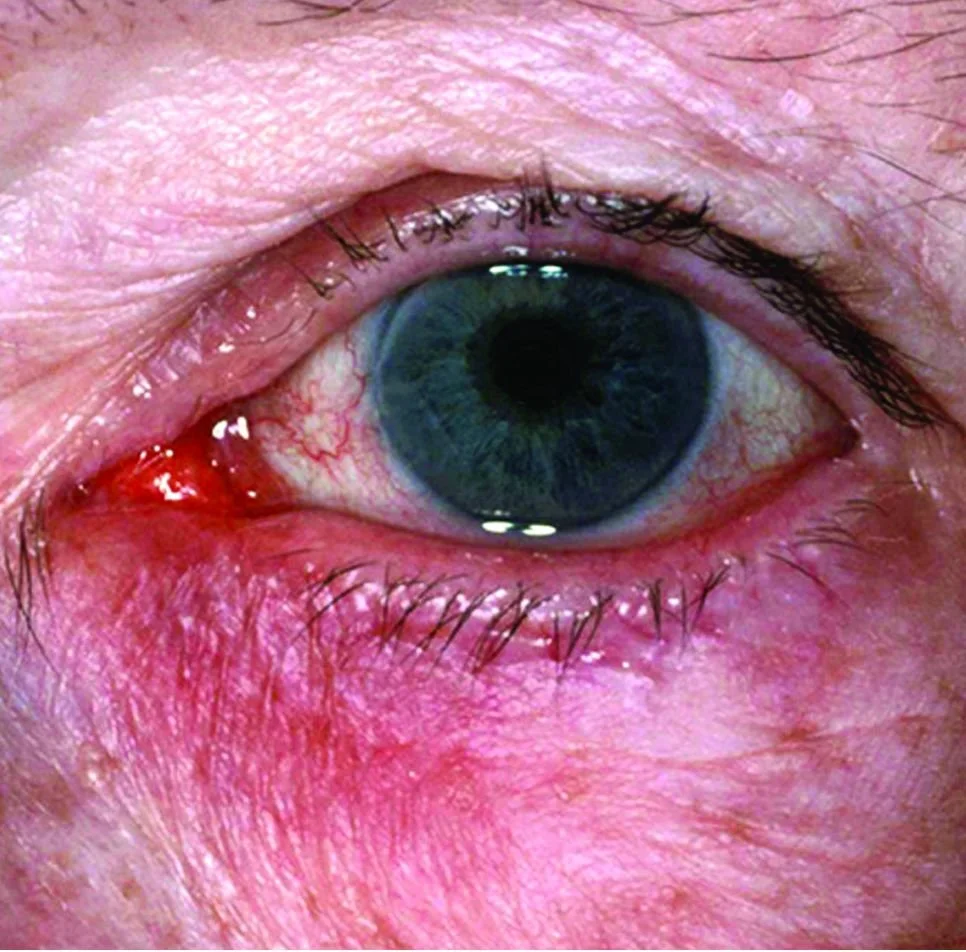
Subtype 4 - Ocular Rosacea
Redness, burning, stinging and itchiness of the eyes. Can also cause a gritty sensation and watering. Develops in 58-72% of people with rosacea. Requires medical intervention.
The Innate Immune System
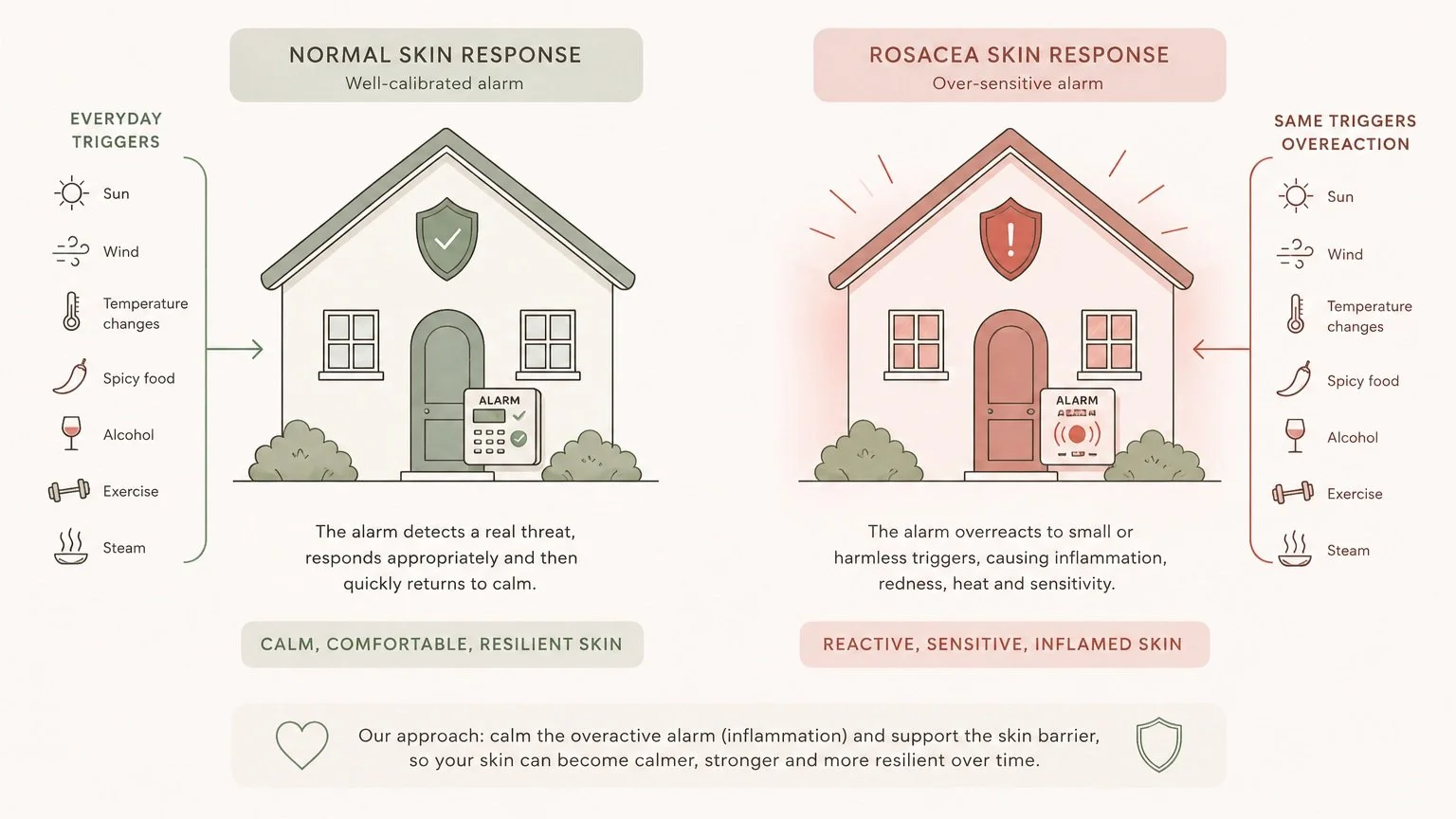
The innate immune system forms part of the skin’s natural defence response, constantly monitoring for potential threats and responding quickly when it believes the skin is under attack.
In rosacea, this response can become overactive, a little like an overly sensitive alarm system. Things that may ordinarily be harmless can trigger a disproportionate inflammatory response, contributing to the redness, heat, sensitivity and reactivity associated with rosacea.
Other factors, including increased levels of naturally occurring Demodex mites, may also contribute to inflammatory activity within rosacea skin.
Calming this heightened inflammatory response, while restoring and strengthening the epidermal barrier, is therefore central to how we approach rosacea skin.
“Not everything red is Rosacea”
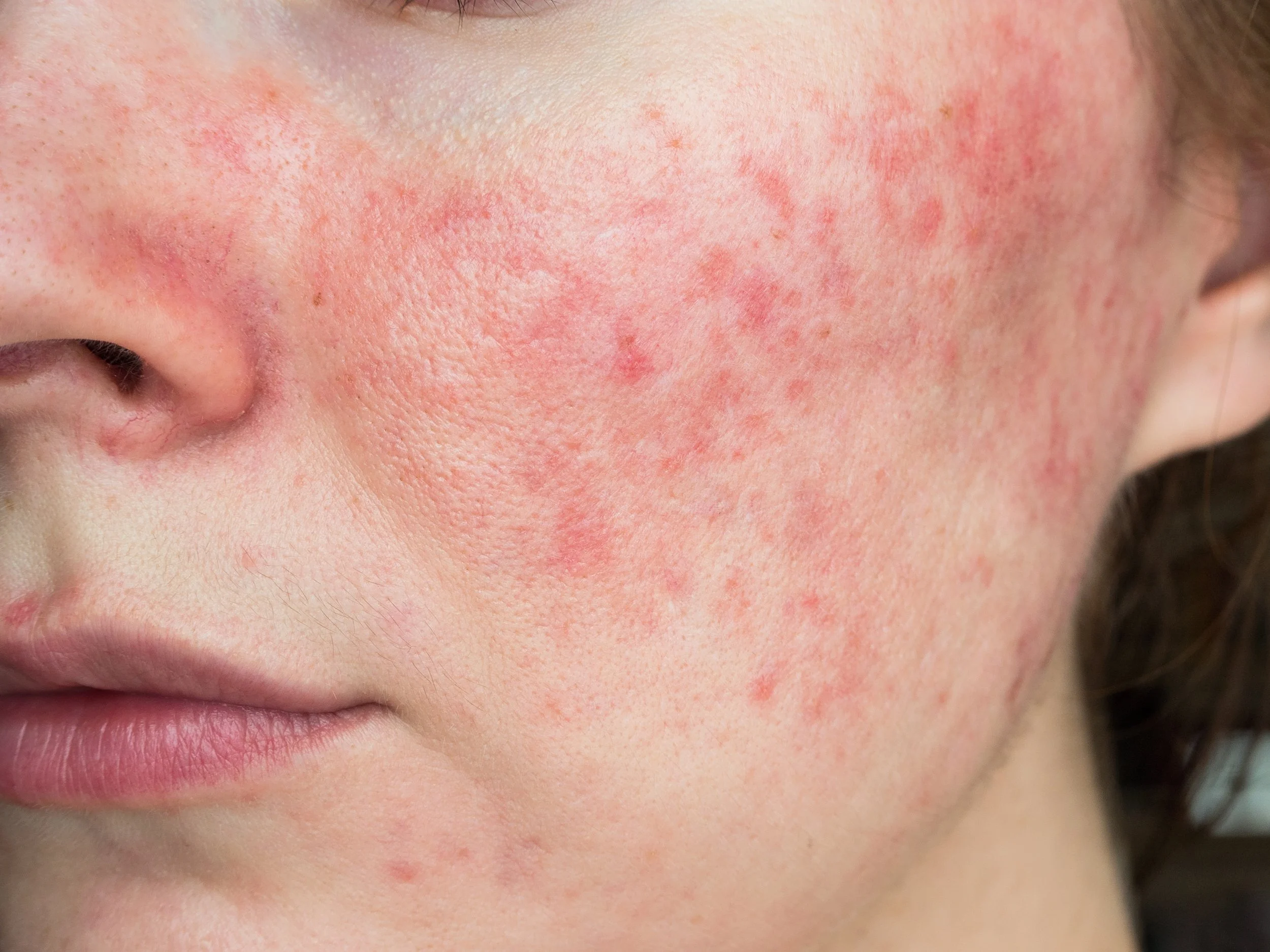
Recognising Rosacea:
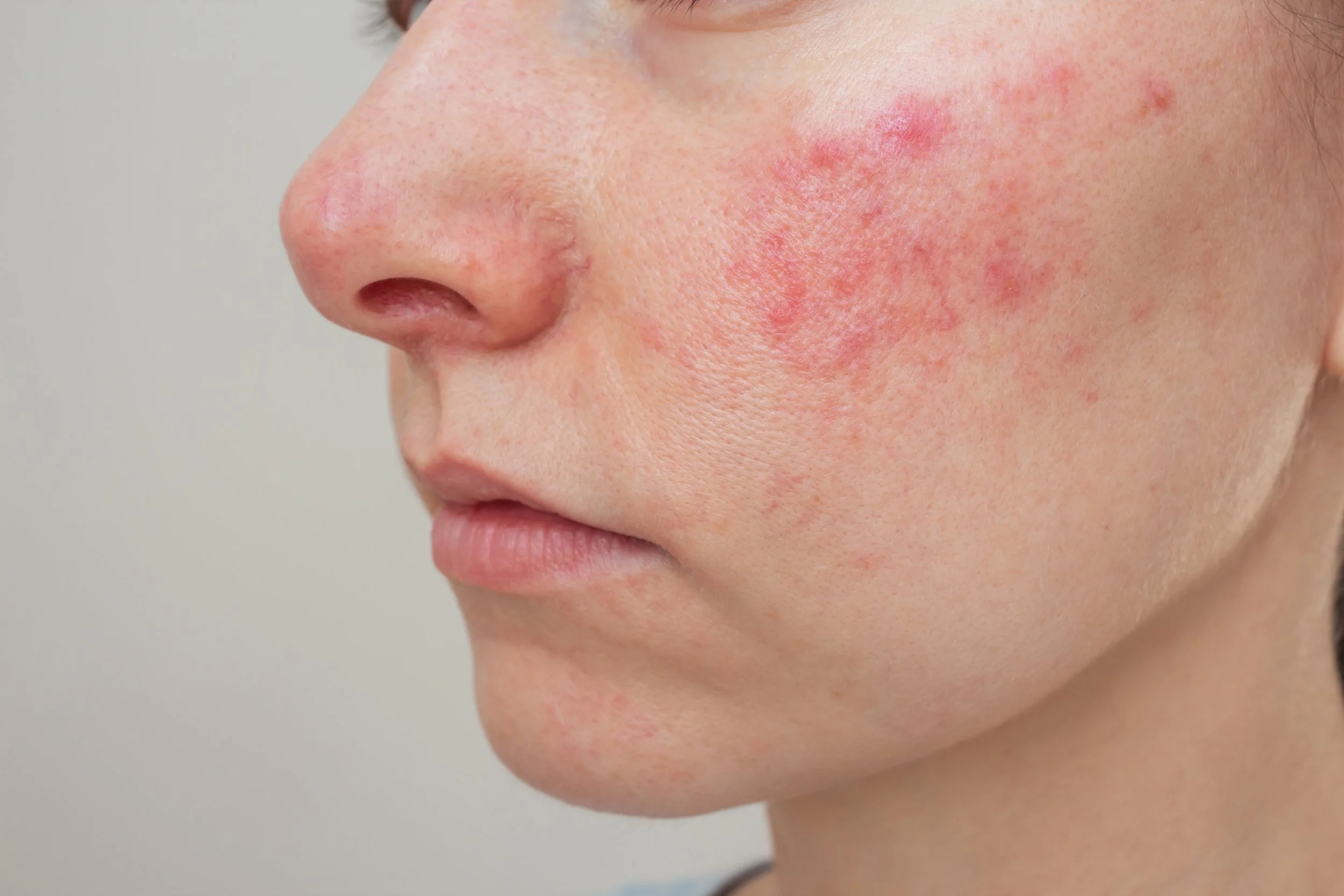
Rosacea can present in many different ways, which is why correct assessment is so important. Common signs can include:
- Flushing or persistent facial redness
- Heat, sensitivity and reactivity
- Visible thread veins
- Red bumps or pustules
- Dryness, tightness or flaking
Rosacea can also affect the eyes, causing redness, burning, itching, watering or a gritty sensation.
How Can We Help?
No two rosacea skins are the same, and neither are their triggers.
Sun exposure, temperature changes, alcohol, spicy foods and exercise are common aggravating factors, but understanding what affects your skin is key.
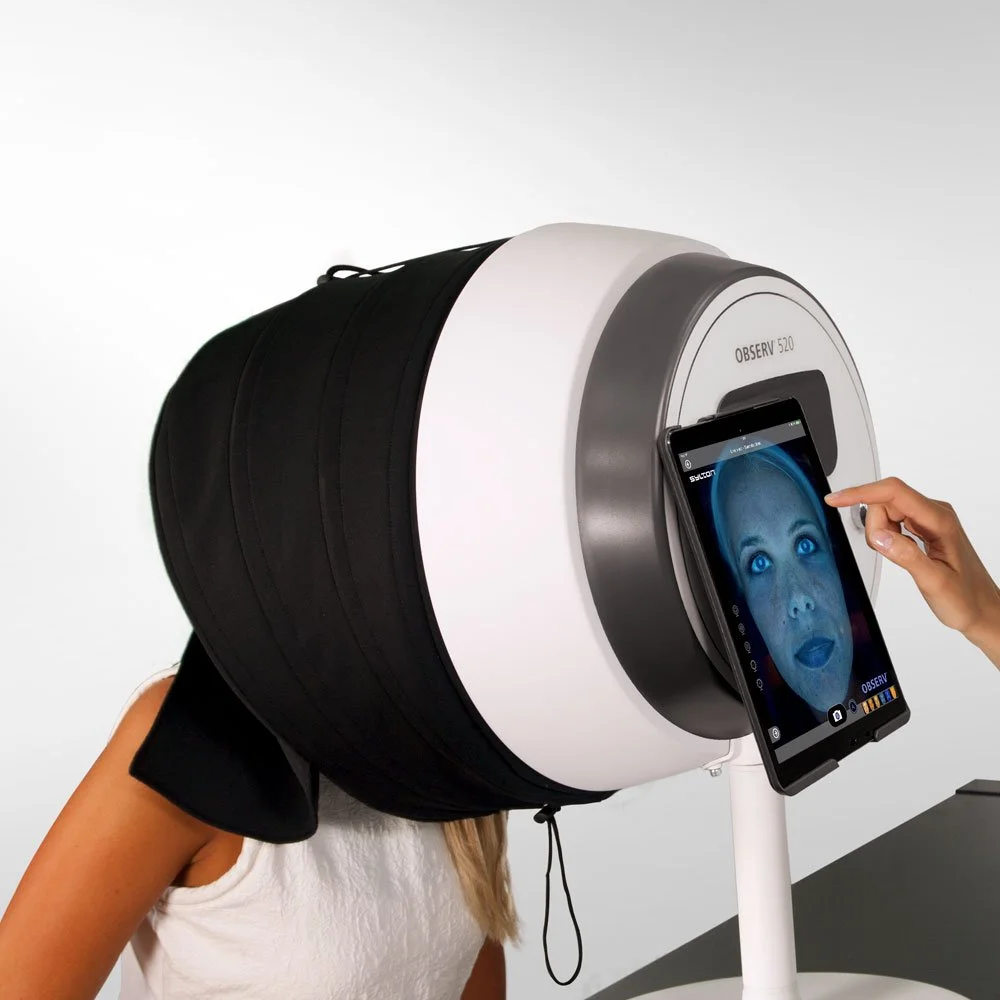
Our Skin Health Consultation allows us to assess your skin, understand its history and identify potential triggers before creating a bespoke treatment and homecare plan.
Our priority is to calm inflammation and restore and strengthen the epidermal barrier, using carefully selected treatments and prescriptive skincare that work with the skin rather than overwhelm it.
With rosacea, less is often more. Our aim is to build healthier, more resilient skin and make flare-ups calmer and more manageable long term.
Real Results